

This article first appeared in thegrocer.co.uk.
When new restrictions on the display of foods as part of the HFSS regulations come into effect in October, the grocery sector will change shelf layouts. Find out how Planogram Publisher can help you tackle the challenges and opportunities this will bring.
Sometimes, the only constant is change. Over the past few years, a series of extraordinary events – ranging from pandemic-related panic buying through to immense disruption in the global supply chain – have forced grocery stores to rethink layouts and lines, often almost literally overnight. And as 2022 continues, further change is still to come.
When new restrictions on the display of foods that are high in fat, sugar, and salt (HFSS) come into effect in October, the grocery sector will face what is arguably the biggest premeditated shakeup to store layouts in recent history. With strict limitations applied to their placement, products that fall under the purview of HFSS legislation will be subject to a major shift in their in-store positioning.
For the consumer packaged goods (CPG) brands that manufacture those items, these changes will necessitate a significant change in approach. While high-impact placements and volume promotions will have formed an integral – and undoubtedly effective – element of their marketing strategy to date, those opportunities will simply cease to exist come the autumn.
As challenging an environment as that will create for many CPGs, that’s not to say that there aren’t ways to navigate it effectively. And while there’s no "one-size-fits-all" solution to the issues posed by HFSS, there is at least a common path for brands to walk – one that starts with a smarter approach to understanding the shelf.
When the new HFSS rules kick in, it’s likely that two “groups” of brands will emerge. In the first will be those whose products have fallen foul of the new legislation and been displaced from in-store feature space as a result. In the second will be those with an opportunity to move their products into the areas vacated by their peers. The needs of each will be distinct.
On the one hand, for example, will be a group of companies that need to rethink their go-to-market strategy, whether by reformulating their approach to the aisle, exploring new product development (NPD), or something entirely different. On the other will be a – potentially much larger – group who have the chance to elevate their products into feature positions, but don’t necessarily have a practical understanding of how best to do so.
Some CPGs, by virtue of the breadth of their offering, will find themselves within both groups at once – dialling some products down even while others move up. But in both cases, what those brands need most is the ability to make shelf-related recommendations to their retail partners using data-driven insights.
This is where Planogram Publisher – a new tool from dunnhumby and exclusive in the UK to Tesco Media & Insight Platform – shows its true value.
Drawing from more than four billion different datapoints, Planogram Publisher allows brands to analyse the placement of their products both across the Tesco store estate as a whole, and down to SKU level within specific categories, key store groups, and individual locations. This is the first time Tesco has made its planogram data available in this way so presents an exciting opportunity for brands.
Planograms enable brands to understand exactly what it is that their customers see when shopping a store or category – something that is hugely important given the challenges posed by HFSS.
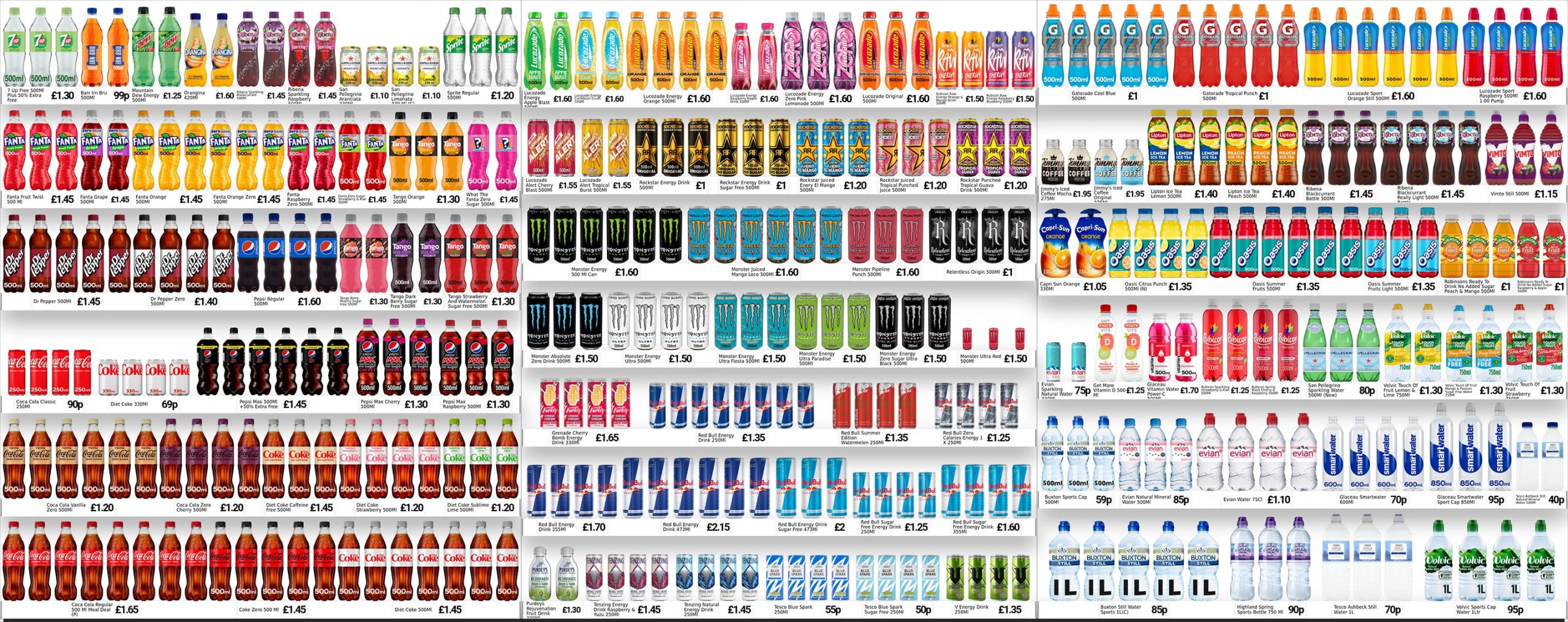
First of all, to understand the full implications of the HFSS regulations, CPGs need a comprehensive understanding of how their products appear in stores today. That knowledge also needs to extend across multiple stores and formats, since product placements can vary considerably from location to location and from layout to layout.
This is primarily an issue of efficiency. Sending field sales teams out to thousands of stores is disruptive and slow, and comes with little guarantee as to the quality of the data that is generated, either. Planograms, by taking that information direct from the source – the entire Tesco UK store network in the case of Planogram Publisher, for instance – offer both greater accuracy and the ability to evaluate product positioning in a more strategic and cohesive way.
There are other dimensions here, too. For those brands whose products are moving out of feature space, one of the key priorities will be to ensure that they can maintain the same level of customer-facing product in the store as a whole – in this case at aisle level. And for those whose products may be moving in to those positions, will come the need to present those items as effectively as possible within the wider context of the shelf.
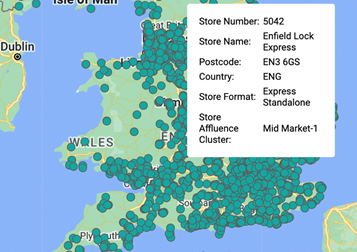
Planograms can assist with all of these objectives, providing brands with consistent, coherent – and most of all, accurate – insights about their products in situ. They offer a true facsimile of their in-store presence, all without needing to send out teams of people to gather data about product line-ups.
These insights can have a tangible impact on brand marketing decisions. For many of the CPGs that will be negatively affected by October’s changes, for instance, NPD is likely to become a major priority. By giving them the ability to understand how new products might fit into the lineup of a shelf, how shoppers will see them, and what the opportunities for differentiation are, planograms can help to maximise the effectiveness of their NPD investments.
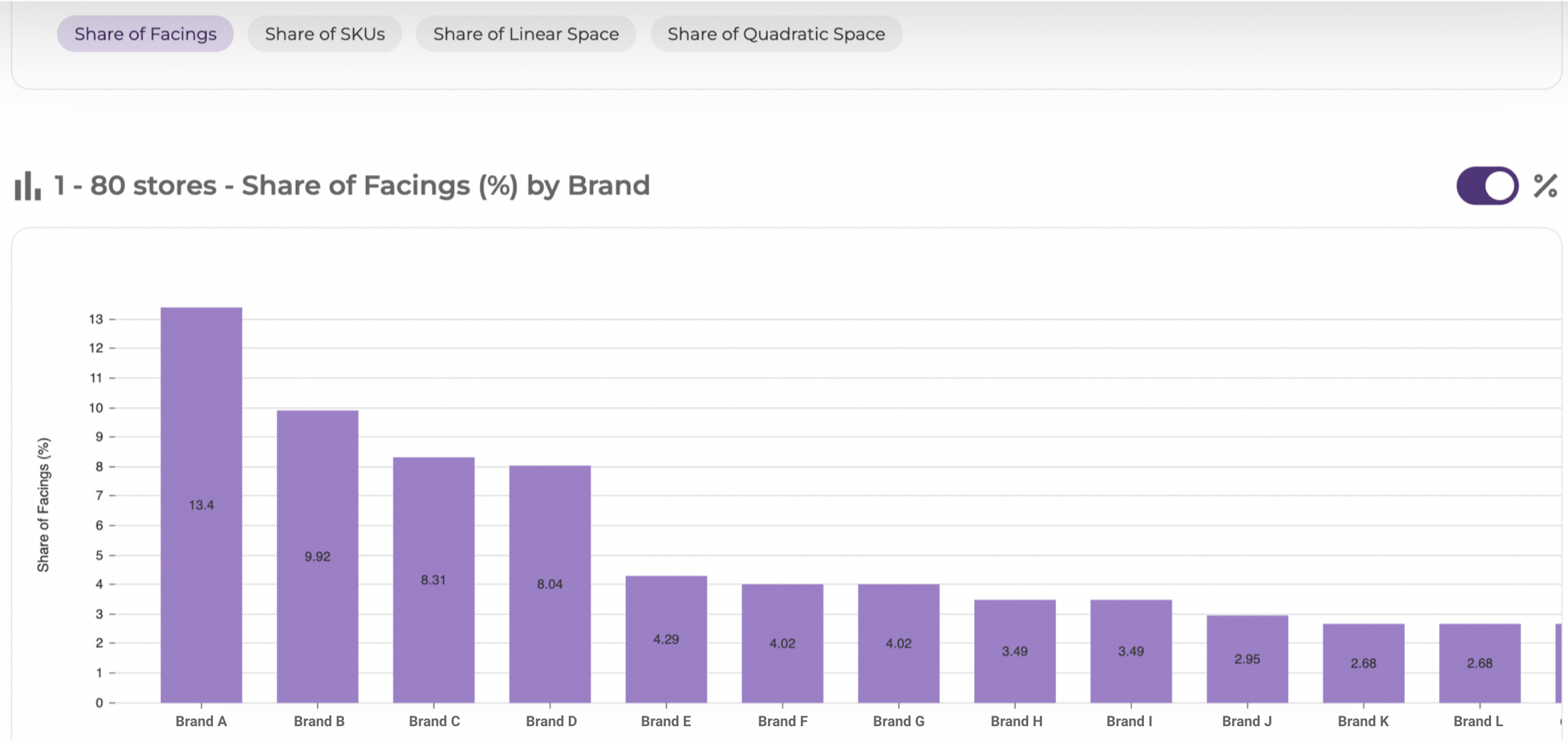
The same principles apply for those who want to protect their share of space on the shelf. With layouts changing, planograms can provide brands with proof as to how much of the category their product accounts for – enabling them to make smart recommendations about the amount of shelf space their items deserve based on fact rather than feeling. The same insights can also be used to understand how position affects performance with shoppers.
There’s also the subject of retail media to consider. By understanding how a category is laid out on shelf, brands can optimise their investments into store marketing tactics like aisle fins and shelf dividers – ensuring that the messaging and creative they employ supports discovery, and helps shoppers to find the products that they want quickly and easily.
The incoming HFSS regulations raise numerous questions for brands, many of which may not even be apparent just yet; we’re undoubtedly at the beginning of a period of change, rather than being at the end of it. There will be few easy answers during this time, but better insights will empower CPGs to make smarter decisions, and remain agile and flexible in the face of continued change.
Understanding how shoppers behave when those changes occur is undoubtedly the future of category management – and attempting to do so without access to good planogram data will be virtually impossible.
Planogram Publisher is a new tool developed in partnership by dunnhumby and VST (Virtual Store Trials) and is exclusive to Tesco Media & Insight Platform in the UK.
| Cookie | Description |
|---|---|
| cli_user_preference | The cookie is set by the GDPR Cookie Consent plugin and is used to store the yes/no selection the consent given for cookie usage. It does not store any personal data. |
| cookielawinfo-checkbox-advertisement | Set by the GDPR Cookie Consent plugin, this cookie is used to record the user consent for the cookies in the "Advertisement" category . |
| cookielawinfo-checkbox-analytics | Set by the GDPR Cookie Consent plugin, this cookie is used to record the user consent for the cookies in the "Analytics" category . |
| cookielawinfo-checkbox-necessary | This cookie is set by GDPR Cookie Consent plugin. The cookies is used to store the user consent for the cookies in the category "Necessary". |
| CookieLawInfoConsent | The cookie is set by the GDPR Cookie Consent plugin and is used to store the summary of the consent given for cookie usage. It does not store any personal data. |
| viewed_cookie_policy | The cookie is set by the GDPR Cookie Consent plugin and is used to store whether or not user has consented to the use of cookies. It does not store any personal data. |
| wsaffinity | Set by the dunnhumby website, that allows all subsequent traffic and requests from an initial client session to be passed to the same server in the pool. Session affinity is also referred to as session persistence, server affinity, server persistence, or server sticky. |
| Cookie | Description |
|---|---|
| passster | Set by Passster to remember that a visitor has entered a correct password, so they don’t have to re-enter it across protected pages. |
| wordpress_test_cookie | WordPress cookie to read if cookies can be placed, and lasts for the session. |
| wp_lang | This cookie is used to remember the language chosen by the user while browsing. |
| Cookie | Description |
|---|---|
| fs_cid | Set by FullStory to correlate sessions for diagnostics and session consistency; not always set. |
| fs_lua | Set by FullStory to record the time of the user’s last activity, helping manage session timeouts. |
| fs_session | Set by FullStory to manage session flow and recording. Not always visible or applicable across all implementations. |
| fs_uid | Set by FullStory to uniquely identify a user’s browser. Used for session replay and user analytics. Does not contain personal data directly. |
| VISITOR_INFO1_LIVE | Set by YouTube to estimate user bandwidth and improve video quality by adjusting playback speed. |
| VISITOR_PRIVACY_METADATA | Set by YouTube to store privacy preferences and metadata related to user consent and settings. |
| vuid | Vimeo installs this cookie to collect tracking information by setting a unique ID to embed videos to the website. |
| YSC | Set by YouTube to track user sessions and maintain video playback state during a browser session. |
| _ga | The _ga cookie, installed by Google Analytics, calculates visitor, session and campaign data and also keeps track of site usage for the site's analytics report. The cookie stores information anonymously and assigns a randomly generated number to recognise unique visitors. |
| _ga_* | Set by Google Analytics to persist session state. |
| _gid | Installed by Google Analytics, _gid cookie stores information on how visitors use a website, while also creating an analytics report of the website's performance. Some of the data that are collected include the number of visitors, their source, and the pages they visit anonymously. |
| _lfa | This cookie is set by the provider Leadfeeder to identify the IP address of devices visiting the website, in order to retarget multiple users routing from the same IP address. |
| __Secure-ROLLOUT_TOKEN | YouTube sets this cookie via embedded videos to manage feature rollouts. |
| Cookie | Description |
|---|---|
| aam_uuid | Set by LinkedIn, for ID sync for Adobe Audience Manager. |
| AEC | Set by Google, ‘AEC’ cookies ensure that requests within a browsing session are made by the user, and not by other sites. These cookies prevent malicious sites from acting on behalf of a user without that user’s knowledge. |
| AMCVS_14215E3D5995C57C0A495C55%40AdobeOrg | Set by LinkedIn, indicates the start of a session for Adobe Experience Cloud. |
| AMCV_14215E3D5995C57C0A495C55%40AdobeOrg | Set by LinkedIn, Unique Identifier for Adobe Experience Cloud. |
| AnalyticsSyncHistory | Set by LinkedIn, used to store information about the time a sync with the lms_analytics cookie took place for users in the Designated Countries (which LinkedIn determines as European Union (EU), European Economic Area (EEA), and Switzerland). |
| bcookie | LinkedIn sets this cookie from LinkedIn share buttons and ad tags to recognise browser ID. |
| bscookie | LinkedIn sets this cookie to store performed actions on the website. |
| DV | Set by Google, used for the purpose of targeted advertising, to collect information about how visitors use our site. |
| gpv_pn | Set by LinkedIn, used to retain and fetch previous page visited in Adobe Analytics. |
| lang | Session-based cookie, set by LinkedIn, used to set default locale/language. |
| lidc | Set by LinkedIn, used for routing from Share buttons and ad tags. |
| lidc | LinkedIn sets the lidc cookie to facilitate data center selection. |
| li_gc | Set by LinkedIn to store consent of guests regarding the use of cookies for non-essential purposes. |
| li_sugr | Set by LinkedIn, used to make a probabilistic match of a user's identity outside the Designated Countries (which LinkedIn determines as European Union (EU), European Economic Area (EEA), and Switzerland). |
| lms_analytics | Set by LinkedIn to identify LinkedIn Members in the Designated Countries (which LinkedIn determines as European Union (EU), European Economic Area (EEA), and Switzerland) for analytics. |
| lpv[AccountID] | This cookie is set by Salesforce Marketing Cloud Account Engagement. Prevents counting multiple page views within a short window to avoid duplicate tracking. |
| NID | Set by Google, registers a unique ID that identifies a returning user’s device. The ID is used for targeted ads. |
| OGP / OGPC | Set by Google, cookie enables the functionality of Google Maps. |
| OTZ | Set by Google, used to support Google’s advertising services. This cookie is used by Google Analytics to provide an analysis of website visitors in aggregate. |
| s_cc | Set by LinkedIn, used to determine if cookies are enabled for Adobe Analytics. |
| s_ips | Set by LinkedIn, tracks percent of page viewed. |
| s_plt | Set by LinkedIn, this cookie tracks the time that the previous page took to load. |
| s_pltp | Set by LinkedIn, this cookie provides page name value (URL) for use by Adobe Analytics. |
| s_ppv | Set by LinkedIn, used by Adobe Analytics to retain and fetch what percentage of a page was viewed. |
| s_sq | Set by LinkedIn, used to store information about the previous link that was clicked on by the user by Adobe Analytics. |
| s_tp | Set by LinkedIn, this cookie measures a visitor’s scroll activity to see how much of a page they view before moving on to another page. |
| s_tslv | Set by LinkedIn, used to retain and fetch time since last visit in Adobe Analytics. |
| test_cookie | Set by doubleclick.net (part of Google), the purpose of the cookie is to determine if the users' browser supports cookies. |
| U | Set by LinkedIn, Browser Identifier for users outside the Designated Countries (which LinkedIn determines as European Union (EU), European Economic Area (EEA), and Switzerland). |
| UserMatchHistory | LinkedIn sets this cookie for LinkedIn Ads ID syncing. |
| UserMatchHistory | This cookie is used by LinkedIn Ads to help dunnhumby measure advertising performance. More information can be found in their cookie policy. |
| visitor_id[AccountID] | This cookie is set by Salesforce Marketing Cloud Account Engagement. Unique visitor identifier used to recognize returning visitors and track their behavior. |
| visitor_id[AccountID]-hash | This cookie is set by Salesforce Marketing Cloud Account Engagement. Secure hash of the visitor ID to validate the visitor and prevent tampering. |
| yt-remote-connected-devices | YouTube sets this cookie to store the video preferences of the user using embedded YouTube video. |
| _gcl_au | Set by Google Tag Manager to store and track conversion events. It is typically associated with Google Ads, but may be set even if no active ad campaigns are running, especially when GTM is configured with default settings. The cookie helps measure the effectiveness of ad clicks in relation to site actions. |